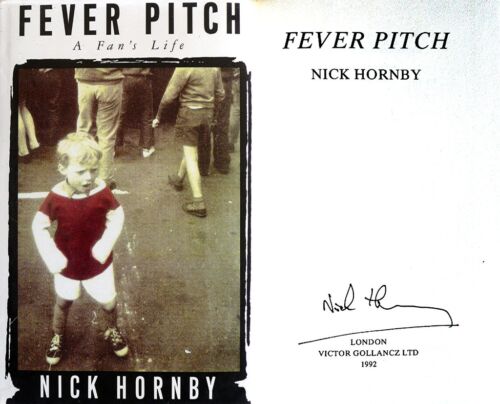
Fever Pitch by Nick Hornby
My rating: 3 of 5 stars
Having been a football and Premier League fan since the late 1990’s, I finally picked up my copy of Nick Hornby’s ode to football supporting obsession, Fever Pitch. The fact that the particular team of his obsession, Arsenal, was the first club I identified with as a ‘fan’ also helped get matters moving along. It is also pertinent that the season just past (2022-2023) was the first time in a long time that Arsenal competed for a major part as genuine title contenders under the bold new vision of Mikel Arteta before being reined in, almost inevitably, by the blue machine that is modern day Manchester City. Hornby’s account is an admirably well written effort which captures the hope, the intermittent glories and happiness, the anger, the obsessive pursuit of the team, and the most persistent emotion perhaps of all for a sports fan – despair.
It was in the late 60’s that the author’s father, unbeknownst to what he will stir up in his son’s heart, took him to Highbury, the old and storied Arsenal stadium, to watch a game against Stoke. The terraces of the old stadium became quite a familiar place for Nick for the next few decades of his life, as he graduated from being a young, hopeful supporter to an adult caught fully in the throes of a feverish love/hate relationship with his club. The football season, running between August and May, came to define his life’s schedules and most people in his personal ambit come to recognize and if not understand, at least tolerate the fact that Arsenal’s results will always be a matter of life and death for him. The dreary games at home with Arsenal’s old reputation of being the masters of the 0-0 or 1-0 bores, the dispiriting away visits and the Wembley Cup final losses lead to perpetual disaffection, but when the big moments come, as they do during the double winning season of ‘70-‘71 or the (obviously) famous last minute league win over Liverpool to clinch the championship in 1989, the delirium almost makes up for it all.
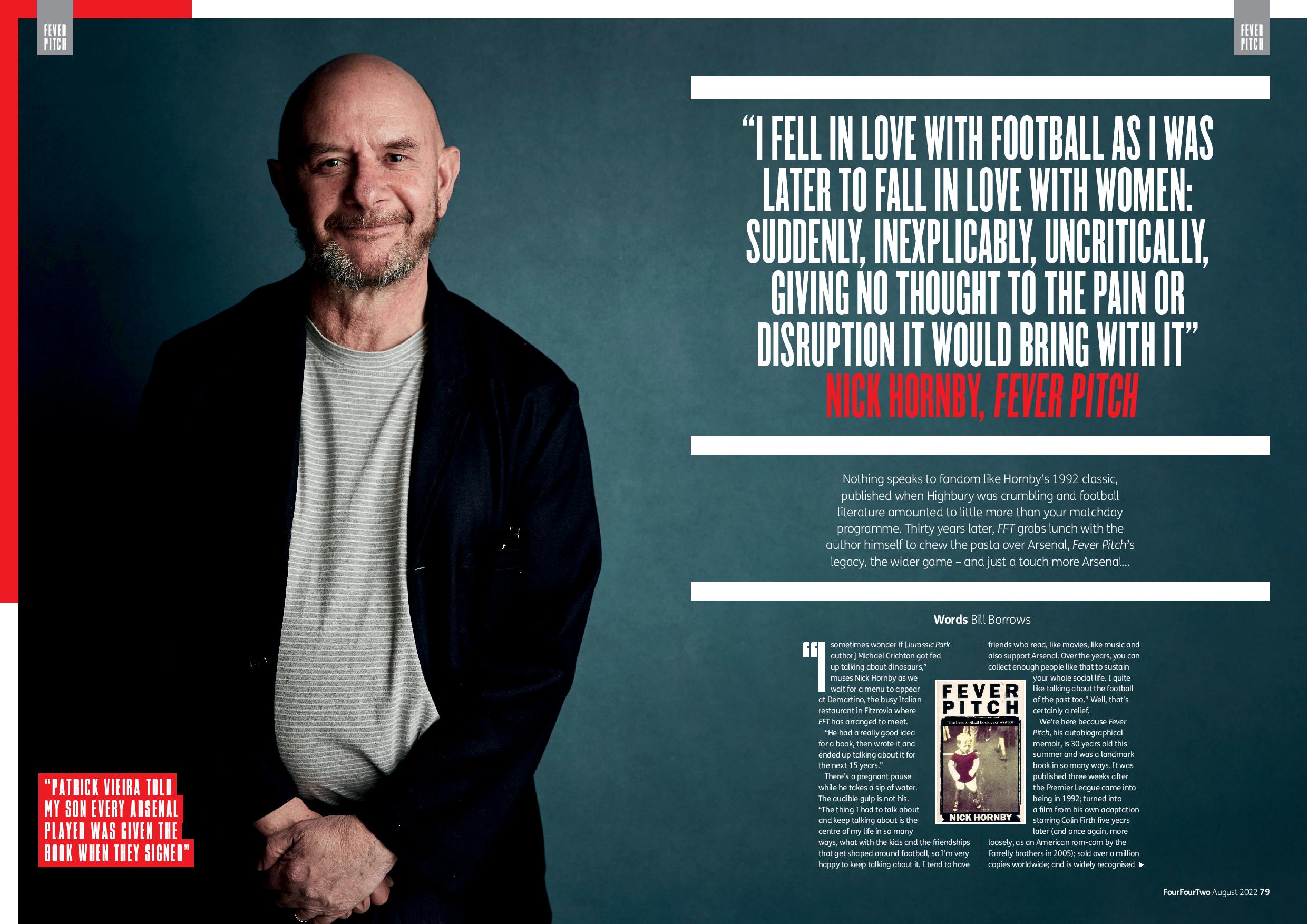
But it is not just the football results that Hornby focuses on. Through his love for the game and for Arsenal, he deep dives into the political and social scenarios surrounding the sporting obsession. The mental makeup which led to the rise of the violent hooligan culture that ended up shaming the English fan well into the 1990’s and which indirectly was responsible for some of the worst tragedies in a football ground, like Heysel in 1985 (which led to English clubs being banned from UEFA competitions for 5 years). There is also an in-depth examination of the conditions at old, decrepit football grounds and the sheer negligence from clubs for the fans who sustain them, which led to the various safety hazards that ultimately led to the devastating loss of lives at Hillsborough in 1989, the effects and recriminations of which are being felt in the English game till date. He does an impressive job of elucidating on the momentary terror that people caught in a potential crush feel every time poorly managed crowd control leads to a potentially dangerous situation and on the virtual survivor’s guilt in the wake of Hillsborough.
On a lighter note, it was amusing for a fan like me, who identified and fell in love with the club based on the modern and attractive play which Arsene Wenger and the supremely talented Dennis Bergkamp espoused, to read about Arsenal’s pre-Premier League era reputation for being masters at the dark arts and the boring team everyone liked to hate. George Graham is perhaps a coach who doesn’t get as much credit as he deserves in Arsenal’s pantheon of history, but here the team he built after a particularly dispiriting period in the 80’s features greatly in the last part of the book. Especially impressive was that team too had an almost invincible season (losing only once) in 1990-1991. In fact, this book runs up right till just before the first division became the global behemoth now known as the Premier League and it would be fascinating to see what Nick Hornby may have to say about the modern Arsenal and about modern football in general, including about the global superfans who pick up one or the other of the richest clubs to support and claim themselves to be die-hard supporters (encouraged greatly of course by the clubs themselves to generate further revenues). This is not a book about them. This is a book about that fan whose entire life has been an obsession with his club, for good or for bad.
View all my reviews
 DipsicDude