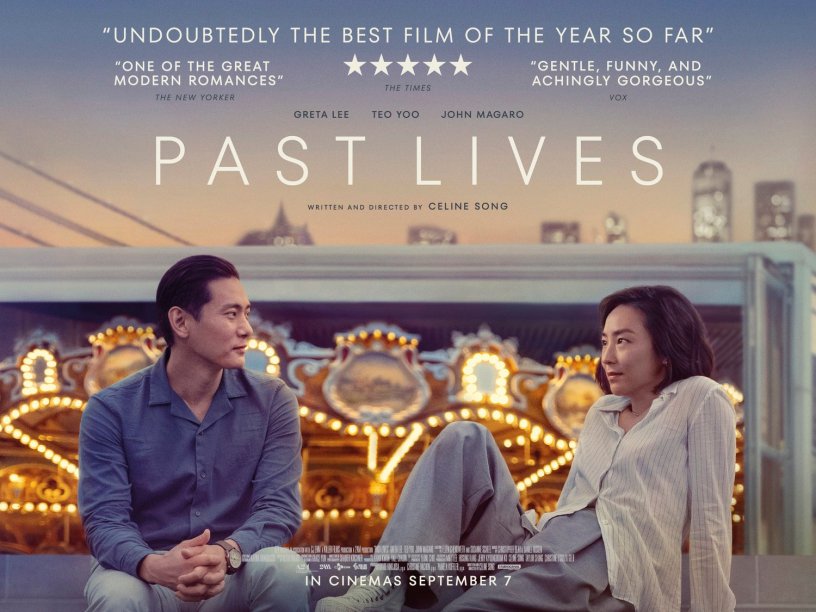
There is a beautiful concept which is enunciated on in this beautifully illuminating little movie, like a Korean version of kismet or destiny. It’s called inyeon, as the character calls it, and it is a belief which talks about the connectedness of all lives which brush past each other, whether amongst lifelong partners or those who just touch shoulders in a single commute. It ties into the ubiquitous theme of love, current and long lost, which the movie tries to bring forth. Our connectedness with such people is continuing from past lives, sometimes many such past lives or layers, and makes us find each other in our present. It is an unabashedly romantic notion in a film which, while utterly romantic, also does not shy away from painting the realities of how lives and who we are change over time and how some relationships and people may always be destined to be fated but never there. Almost. A word cloaked in beauty and bittersweet longing. There are some unrequited bonds which hurt all the more sometimes if only because they never got the chance to really start in the first place.
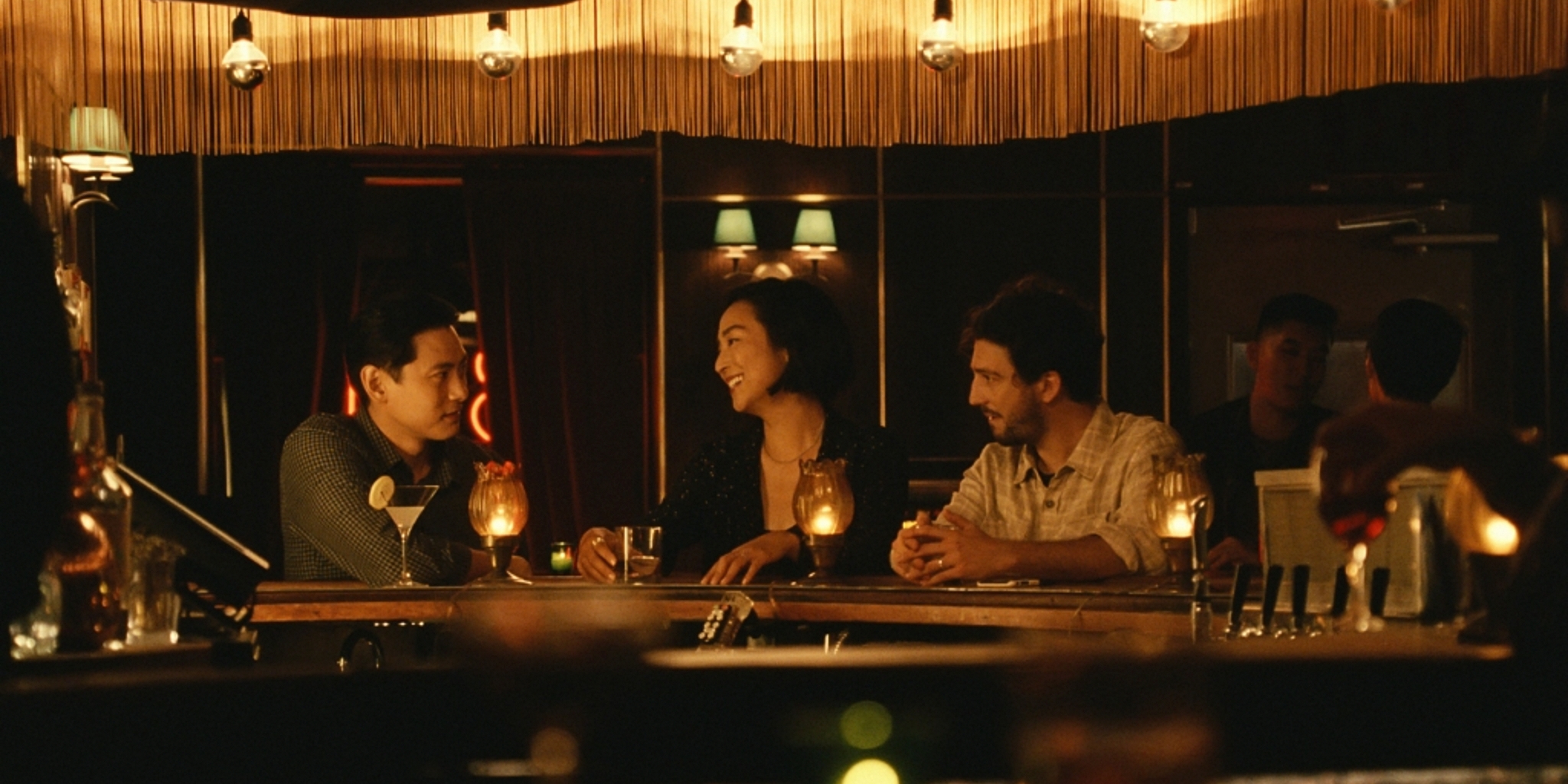
The film opens up in a very innovative use of an old trope, the one where a film’s leads spot a couple of strangers and try to guess what their lives are and who they are. Except here, it is the leads being spied upon by some strangers, voices which speculate on the relationships between Nora (Greta Lee), Hae Sung (Teo Yoo) and Arthur (John Magaro). The entire story of what brought these three to this point in life is something probably they would never have guessed at, and it touches upon the numerous instances of people-gazing we may have done ourselves in real life without a clue on the multitudes of stories that whirl around us.
We go back 24 years to Seoul and two kids on the cusp of their teenage years. They spend a lot of time together, and perhaps may have eventually blossomed into something more. But it remains an almost. The girl’s family immigrate to Canada and as many childhood crushes go, that is that. Or is it? Twelve years later Nora is a playwright living in New York and she finds out that Hae Sung has been searching for her in the web sphere. They connect on Facebook and start a tentative but exciting communication through Facebook and Skype. Though 2011 may not be too far back in history, the leaps and bounds in digital communication since then provides us a quaint and comforting sense of nostalgia in the Skype conversations and Facebook-trawling which these two indulge in. While the initial beats of the long-distance friendship (relationship?) are invigorating and all-consuming, like synchronizing their times zones and sleep/wake cycles, soon the realities of their lives catch up to them. It becomes obvious that a meeting-up will not happen anytime soon and as excitement turns to yearning and then becomes an all-encompassing distraction, Nora decides it’s time to take a break from each other. During the next twelve years, till they meet again for real, things happen, as they do in life. Nora meets someone, Arthur, at her writers’ residency, gets married, while Hae Sung too has a relationship which looks like it’s ending. But he decides it is time finally for that elusive New York trip to meet her. While there, the movie truly takes off in the beautiful, intimate conversations that the trio of characters (Nora, Hae Sung, Arthur) have with each other; these conversations cover a lot of what life and love means for a lot of us and is tinged with both a bittersweet yearning for what could have been while also recognizing the beauty of what is. Ultimately, what we are left with is artistic beauty created from a template of utter simplicity.
The filmmaker, Celine Song, is an accomplished playwright prior to making this, her first feature. Her background and some life events have been incorporated into the story to give it a bit of an autobiographical feel and this probably helped to make the unique combination of a love story that doesn’t shy away from the real. Her theatre background is evident in some of the sequences, particularly the poignantly intimate bedtime conversation that Nora and Arthur have at a crucial point of the movie, where two characters speak out their lines in beautiful and naked simplicity and comfort in each other and which gives such an insight into these people, particularly Arthur, who could have been otherwise turned into the functional or evil third wheel in the story. A lesser film may have done that. But this is not that film. This is not lesser than much other films, as far as I’m concerned. In its own way, it is an immense adventure of the heart.
 DipsicDude