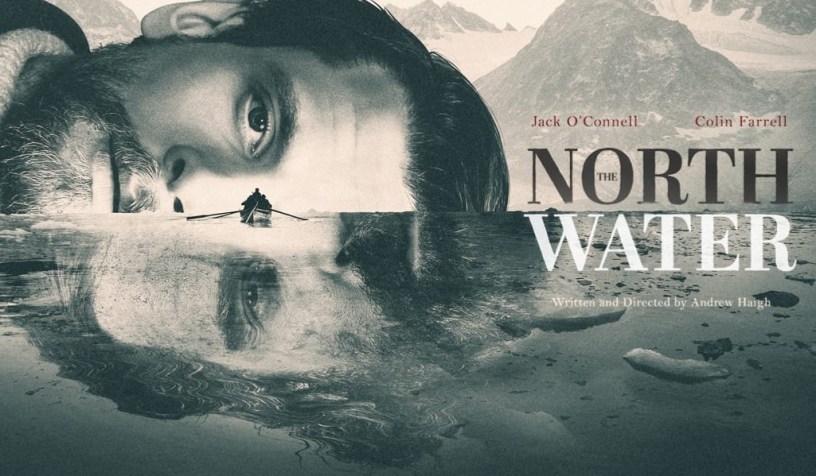
The source from which this show has been made was a brilliant page turner and when I heard there was a television mini-series in the works, I knew I just had to check it out. This is one book which is worth an adaptation, if only for the stunning locales and engrossing plot. But the series, directed by Andrew Haigh who hitherto was more known for intense and smaller mood pieces, is a revelation satisfying my high expectations going in. The casting choices, the cinematography and the general thrust of the narrative captures the mood of the novel so well that I have to say it is one of the best adaptations of a literary work I’ve seen.
The story, for those not familiar with the Booker longlisted novel by Ian McGuire, takes place mostly aboard a British whaling vessel, the Volunteer, in the year 1859. Commandeered by Captain Brownlee (Stephen Graham), the ship is a cloistered mix of characters, most prominently from the story’s point of view being army surgeon Patrick Sumner (Jack O’Connell) and master harpoonist Henry Drax (Colin Farrell). It is established from the off that Drax is an inveterate incarnation of evil, a character driven, as per his own admission during the course of the series, by his instincts and momentary needs than by any particular design or conscience. The first few minutes with him on land introduce us to the sheer villainy which we can expect to follow on the ship. Sumner, in the other hand, has what he thinks is a tight backstory to tell the captain, but it is obvious that he is running away from something and from his haunting memories of his time in India. These two are set on an increasingly fraught path towards each other from the time the ship sets sail.
There are other issues going on too though. The whaling industry has passed its zenith and profits (and the presence of whales) are already waning. The ships owner, Baxter (Tom Courtenay), along with Brownlee and the brutish first mate Cavendish (Sam Spruell) have plans for the ship which no-one else on board, bar perhaps Drax, has wind of and this sets the whole party on a dangerous path. But when a cabin boy is killed on board, all hell starts to break loose, as Sumner tries to do right by his profession and to uphold justice, despite the brutal nature of the environment he finds himself in. Eventually, when the ship runs aground of some ice shelves, the men must find a way to survive the brutal weather and the elements, as well as their own nature. And Drax is a fiendish and cunning survivor who has perhaps met his unlikely match in Sumner.

The mood is a perfect match to the vibe of the book. The stark natural elements and landscape, shot in Svalbard, induce in the viewer the awe and terror of the unknowable. There are graphic scenes around the capture and butchering of seals and whales, as well as a lot of other blood and gore going around, so this may not be the best watch for those with a fragile constitution. But none of it is superfluous or exploitative. It is essential to establish the place and time; of the reason why these men are the way they are and why the brutality seems so commonplace to them. After the machinations on board the ship in the first half of the series, the last couple of episodes turn into more of a survivalist drama on the ice and these are also impeccably portrayed on screen, while we are never allowed to forget the bigger picture of the whole show; the dichotomy of two souls at different ends of the moral spectrum.
For the most part, the screenplay is remarkably faithful to the original story. A few minor changes have been made at certain points, but nothing which majorly detracts from the enjoyment of this. Farrell and O’Connell are riveting in their roles and make their confrontation believable. Perhaps it’s a bit of a stretch sometimes to hear Farrell expound on his baser nature in impeccable language, but that is surely a minor offense. This is a rip-roaring adventure tale with the heart of a literary work which explores the darkness of man and the utterly uncaring way the natural world can swat aside our pithy concerns if we run afoul of it.
 DipsicDude