
Kishkindha Kaandam is a devastatingly effective portrait of pathos and a unique take on the detective story. This film was a bit of a slow-burn blockbuster in the cinemas, and the story too takes its own time to get to its stunning conclusion. But the journey there is a gripping tale of love, loss and the inherent sadness in the history of familial love.
There are three primary characters. Two of them, Ajayan (Asif Ali) and Aparna (Aparna Balamurali), begin the film by getting married in the nondescript environs of a registrar’s office. There is an election coming up owing to which all registered firearms users are expected to submit their weapons for the duration. The hook of the story finds that a gun owned by Ajayan’s father, Appu Pillai (Vijayaraghavan) is missing, and Aparna is welcomed to her husband’s home with the sight of police officers questioning the cranky old man on its whereabouts. He, who seems to be using the crankiness to hide his inherent memory problems, is defiant. Ajayan is quietly apologetic in the manner of someone who has grown used to living with a perpetually grumpy father. The place Aparna finds herself in is a far cry from the Bangalore IT world she left behind. In a nod to the name of one of the episodes in the Ramayana, the title refers to a kingdom of monkeys, and there are plenty populating this place, the trees and forests surrounding liable to be laden with various household items flicked by the creatures and deposited there. Could the gun have been one such item? But Appu Pillai is a hard person to pin down, and Aparna soon starts to realise that things in her new household are not as straightforward as they should be. Why is her father-in-law so fiercely protective of his room and belongings? What does he keep writing in those pieces of paper? Why are there fires every once in a while, as if burning something, in the nearby forest?
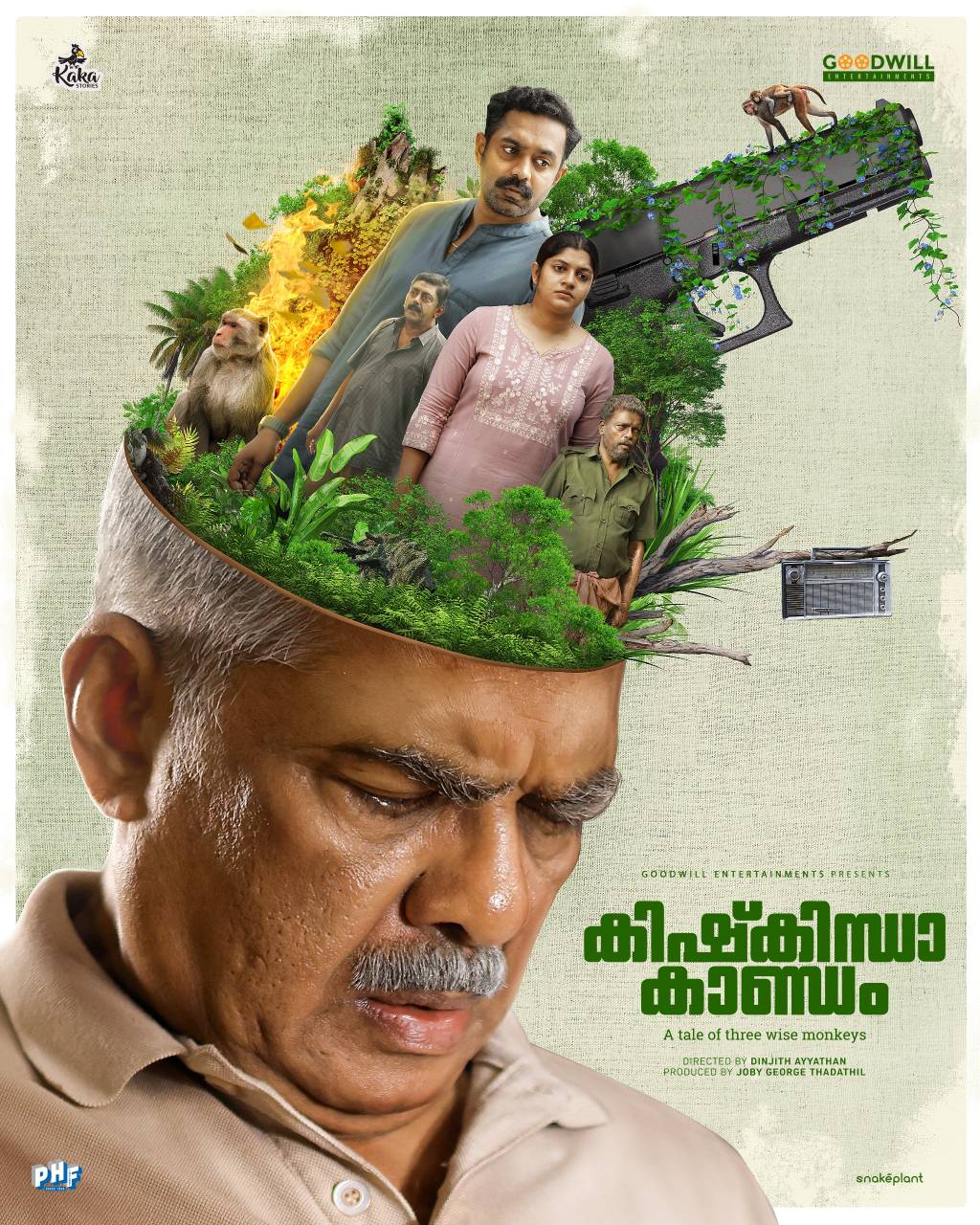
I guess if one is overtly critical, one can say that Aparna’s character is something of a deus-ex machina character to just get the whole story running, as there isn’t really any other background or reasons given for these two coming together as a couple, especially as Ajayan is still struggling with his grief from the losses of his first marriage. But that’s a minor concern that eases away once we get pulled into the story she investigates. The missing gun, the forgetful father-in-law, the easily agreeable husband and the shady friend (Jagadish) of Appu Pillai, all seem linked in some way to the ultimate mystery of the fate of Ajayan’s son from his first marriage, who has been missing for years. But, as she delves deeper into the circumstances around Appu Pillai’s behaviour, does anyone even want the truth to be exposed?
I’ve heard a lot of about the brilliance of screenplays and characterizations in contemporary Malayalam cinema, but surely this is a film which justifies the accolades. The screenplay is magnificent, and the tone and pace of the film is perfect for the kind of story it wants to tell, one of grief both restrained and prone to simmering explosion. And the characterizations. Vijayaraghavan is the obvious scene-stealer, a powerhouse of a performance which evokes both sympathy and perhaps empathy for the devastating effect of old-age illnesses on our loved ones. His Appu Pillai is a cantankerous old man on the surface, but once the layers of the story are peeled away, there is a man underneath who is just worried for himself and his family and does what he thinks is best for them. This has to be one of the best elderly characters I’ve seen on the Indian screen in a while. But, almost in the background, Asif Ali as the quietly suffering presence is equally brilliant. I have never always been his biggest fan, but he has done some great turns in the last few years, and perhaps this is his best. There are no showy dialogs or outbursts, until a moment of true catharsis towards the end, where his eyes speak as much as his words; surely, an actor has arrived if he is capable of making one cry with him. I hope both these performances are considered at least for some joy during awards season. Aparna Balamurali is her usual efficient self, but the story gives her lesser to do than the others. As a trinity, they take the film to remarkable highs.
Don’t expect a tidy resolution to events here though. The ending reveal is a sucker punch in its own way, an understanding that some secrets just have to be kept. This is cinema at its best in a year already overflowing with masterpieces from the Malayalam industry.
 DipsicDude